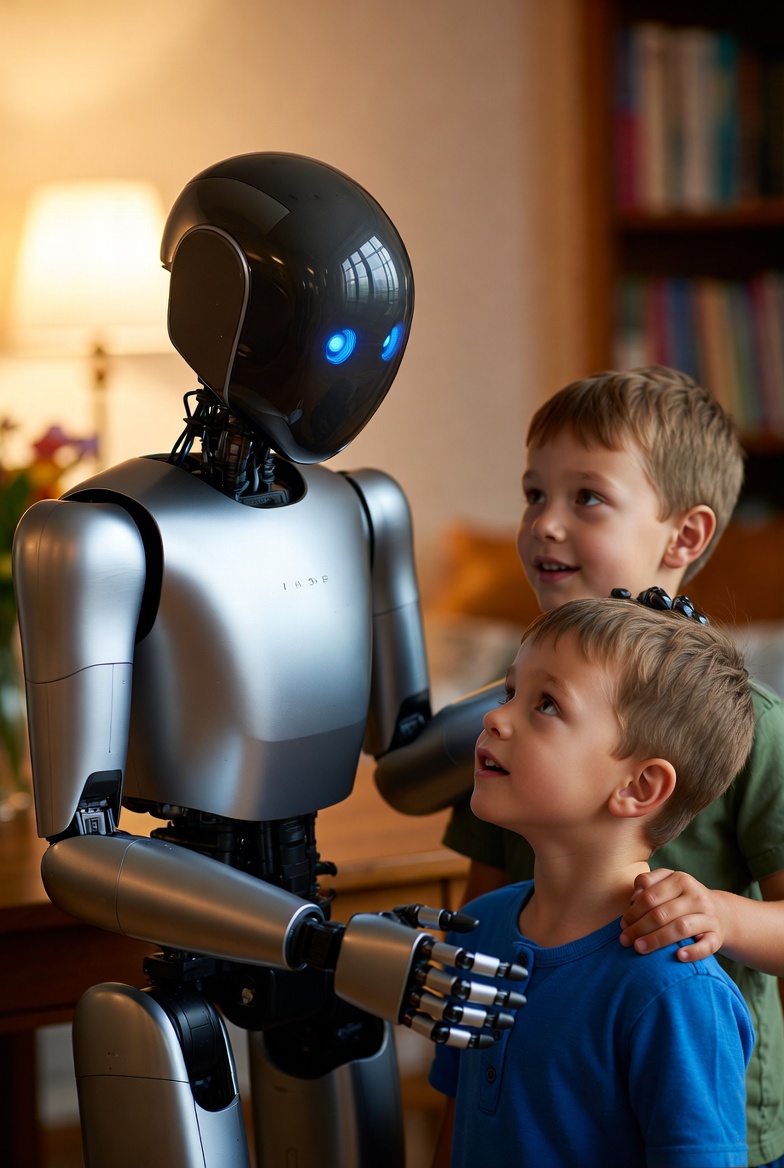
The World Our Children Are Inheriting
By the time today's kindergarteners enter the workforce, artificial intelligence will have transformed nearly every industry. Healthcare, education, law, finance, creative arts — no field will be untouched.
This isn't speculation. It's already happening. AI is diagnosing diseases, writing legal briefs, composing music, and teaching students. The question isn't whether AI will shape our children's futures. It's whether our children will be prepared to shape AI's role in the world.
What AI Literacy Actually Means
When people talk about "preparing kids for AI," they often default to coding. Learn Python. Understand algorithms. Build apps.
These skills have value. But AI literacy is broader than technical knowledge. It includes:
Conceptual understanding. What is AI? How does it learn? What can it do, and what can't it do? Children who understand these fundamentals can engage with AI thoughtfully rather than just consuming it passively.
Critical evaluation. AI systems can be biased, wrong, or manipulated. Children need to develop the habit of questioning AI outputs, not just accepting them. "The AI said so" should never be the end of a conversation.
Ethical reasoning. AI raises profound questions about fairness, privacy, accountability, and human dignity. These aren't abstract philosophical questions — they're practical issues that will affect your children's lives. We need to start these conversations early.
Emotional intelligence. As AI takes on more cognitive tasks, the distinctly human capacities — empathy, creativity, ethical judgment, relationship-building — become more valuable, not less. Investing in emotional intelligence is one of the best things we can do to prepare children for an AI-shaped world.
The Role of Parents and Educators
Children don't develop AI literacy in a vacuum. They need adults who are willing to engage with these questions alongside them.
This doesn't mean parents need to become AI experts. It means being curious together. It means asking questions like: "Why do you think the app recommended that?" or "What do you think would happen if the AI made a mistake here?" or "Is this something AI should be making decisions about?"
Educators have a particular responsibility. Schools that treat AI as a threat to academic integrity are missing the point. The students who will thrive in an AI-shaped world are those who learn to work *with* AI — to use it as a tool while developing the judgment to know when not to rely on it.
The Mental Wellness Dimension
One aspect of AI's impact on children that doesn't get enough attention is mental health. Social media algorithms — a form of AI — have contributed to rising rates of anxiety, depression, and social comparison among adolescents.
This is why the mental wellness dimension of AI for children matters so much to me. The KidMind AI and TeenMind AI apps I've built are designed not just to be useful, but to be emotionally supportive. They're built with crisis detection, age-appropriate responses, and a philosophy that puts children's wellbeing above engagement metrics.
The future of AI for children isn't just about education and career readiness. It's about ensuring that the AI tools children interact with are designed to help them flourish — not to exploit their attention for profit.
What We Can Do Today
Start conversations early. You don't need to wait until your child is a teenager to talk about AI. Simple conversations about how apps work, why ads appear, and what computers can and can't do build foundational understanding.
Choose AI tools thoughtfully. Not all AI tools for children are created equal. Look for tools that are transparent about how they work, designed with children's wellbeing in mind, and built with appropriate safeguards.
Model healthy AI use. Children learn from watching adults. If you use AI tools thoughtfully, acknowledge their limitations, and maintain your own judgment, you're teaching your children to do the same.
Advocate for ethical AI. The decisions being made today about how AI is designed and deployed will shape the world our children inherit. Stay informed. Ask questions. Support organizations and companies that prioritize ethical AI development.
The future belongs to our children. Let's make sure they're ready to shape it.
My AI Helper Series creates books and digital tools designed to help children and families navigate the AI-powered world with confidence, curiosity, and care.